
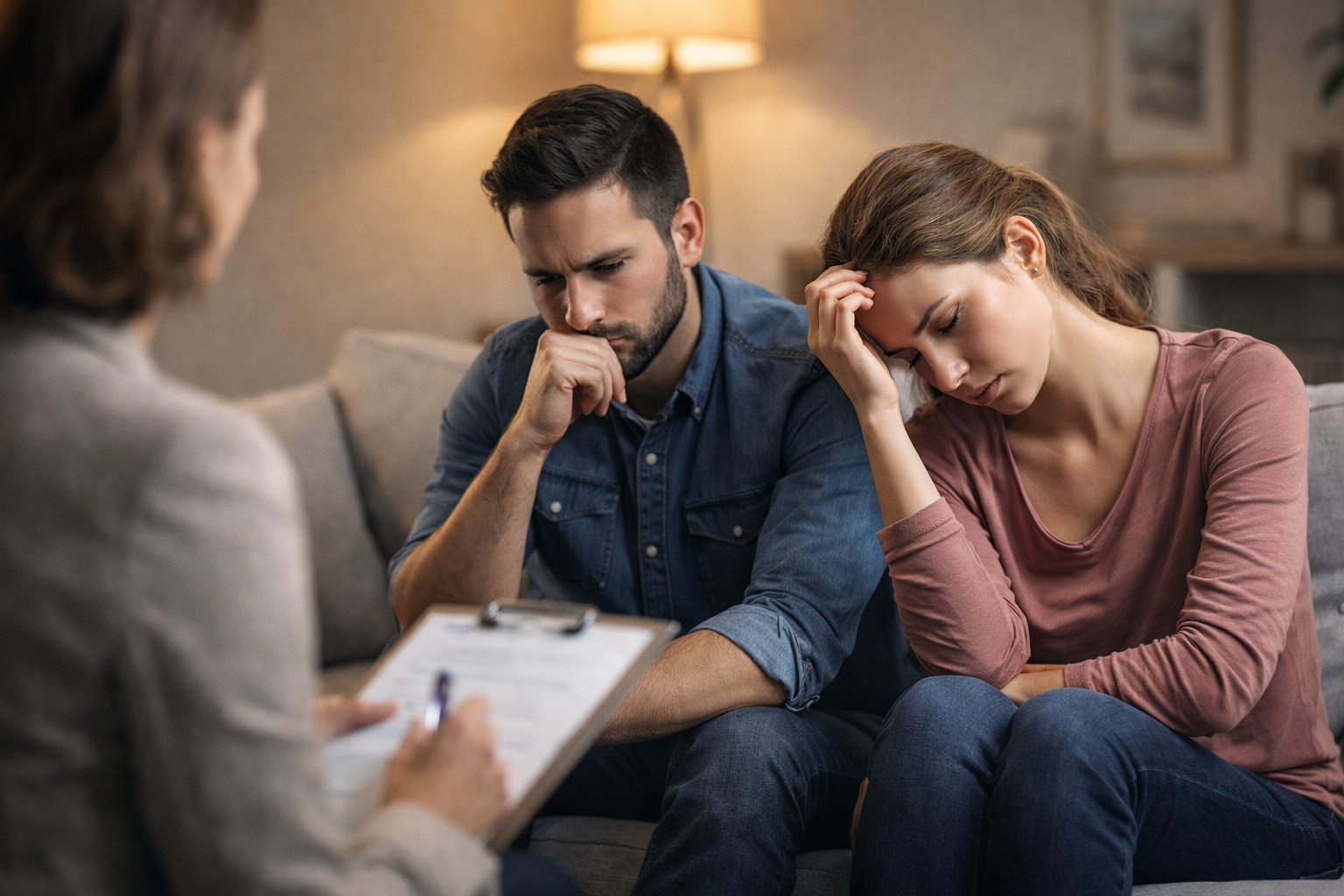
There’s a moment that can shake you. You’re standing in the kitchen or sitting in the car, and you realize you’re having the same fight again.
You try to explain how you feel, but it comes out wrong. Your partner hears criticism. You hear dismissal. Voices rise, doors close, silence takes over, and the distance between you feels wider than it should.
When trust has been hurt, even small moments can feel loaded. A late text, a change in tone, or a forgotten promise can trigger questions you never used to ask. You may start to wonder if you’re too far gone, or if you’re the only one still trying.
At Heatherstone Counseling Services, couples therapy focused on communication and trust gives you a place to slow down and rebuild how you talk to each other.
You learn how to listen without preparing a comeback, how to speak without blame, and how to repair after conflict so it doesn’t keep stacking up.
Why Communication Breaks Down in Relationships
It’s easy to assume that communication problems mean you’re bad at talking. But most couples who struggle to communicate aren’t lacking vocabulary or intelligence. They’re caught in patterns that make honest conversation feel risky.
Perhaps one partner brings up a concern. The other hears it as criticism. Instead of exploring the concern together, both people move into defensive positions. The original issue gets buried under layers of hurt feelings, counterarguments, and old grievances.
Over time, this pattern teaches both partners that bringing up problems leads to pain. So they stop. Conversations become surface-level. Important things go unsaid. And the emotional distance grows.
When past conversations have led to conflict, your brain starts flagging vulnerability as dangerous. You pull back not because you don’t care, but because you’re trying to avoid more hurt.
The problem is that avoidance creates its own kind of damage. When partners stop sharing what they really think and feel, they lose the intimacy that made the relationship feel safe in the first place.
The Role of Assumptions
Another factor that erodes communication is assumption. After years together, partners often think they know exactly what the other person means, even when they’re wrong.
You might hear your partner say “I’m tired” and assume they’re criticizing you for not helping more around the house. Or your partner might interpret your silence as anger when you’re actually just processing.
These assumptions aren’t irrational. They’re based on past experiences. But they can become self-fulfilling prophecies. If you expect your partner to be critical, you’ll hear criticism even when it isn’t there.
And your defensive response will make your partner feel like they can’t say anything without triggering a fight.
How Couples Therapy Improves Communication and Trust
Couples therapy doesn’t give you a script to follow. What it does is help you understand the dynamics that keep you stuck and practice new ways of responding.
Creating Safety for Honesty
Before you can communicate well, you need to feel safe enough to be honest. This is harder than it sounds.
Many couples have learned that honesty leads to conflict. So they edit themselves. They say what they think their partner wants to hear, or they stay silent to keep the peace. The result is a relationship where neither person feels known.
A therapist’s job is to create a space where honesty is possible. This doesn’t mean saying whatever comes to mind without regard for your partner’s feelings.
It means learning to express difficult truths in ways that invite understanding rather than defensiveness.
Learning to Listen Differently
Most people listen to respond. They’re already forming their reply before their partner finishes speaking.
Therapy teaches a different kind of listening; one that prioritizes understanding over winning. This isn’t about agreeing with everything your partner says. It’s about hearing them, even when you see things differently.
One technique therapists often use is called “reflective listening.” After your partner shares something, you reflect on what you heard, not to prove you were paying attention, but to make sure you understood. This simple practice can shift the entire tone of a conversation.
Rebuilding Trust After Betrayal or Emotional Distance
Trust is harder to address than communication. You can practice new communication skills in a single session. Trust takes longer.
If trust was broken through infidelity or deception, the path forward involves more than just apologies. The partner who caused the harm needs to take full responsibility; not once, but repeatedly, while the hurt partner processes their pain at their own pace.
This is uncomfortable work. The partner who caused the harm often wants to move forward quickly. They’ve apologized; why can’t things go back to normal? But healing doesn’t follow a timeline that suits the person who caused the injury.
We at Heatherstone Counseling Services help couples navigate this tension. We create space for the hurt partner to express their pain without being dismissed, and we help the other partner understand that patience is part of accountability.
When Distance Is the Problem
Not all trust issues stem from betrayal. Sometimes trust erodes slowly, through years of unmet needs and emotional disconnection.
You might still love your partner, but no longer trust them to show up emotionally for you. You’ve stopped expecting support because you’ve been disappointed too many times.
This kind of erosion is quieter than infidelity, but it can be just as damaging. And because there’s no single event to point to, it can feel harder to address.
Couples therapy helps by making the invisible visible. A therapist might ask about moments when you felt let down, or times when you reached out and your partner wasn’t there. These conversations can be painful, but they’re necessary. You can’t repair what you haven’t acknowledged.
Get Support With Couples Therapy for Communication and Trust
If you’ve been struggling to communicate with your partner, or if trust has been damaged and you’re not sure how to repair it, couples therapy offers a path forward.
At Heatherstone Counseling Services, we work with couples who are willing to be honest about where they are and curious about where they could go.
If that sounds like you, we’d be glad to talk. Schedule an appointment when you’re ready.
FAQs About Couples Therapy for Communication and Trust
What if my partner doesn’t want to go to therapy?
Many people feel anxious about therapy or assume it means the relationship is failing. It can help explain what you hope to gain and reassure your partner that therapy isn’t about assigning blame.
If they’re still unwilling, individual therapy can help you process your feelings and decide how to move forward.
Can couples therapy help if there was infidelity?
Yes, but it requires both partners to commit fully. The unfaithful partner needs to take responsibility and demonstrate consistent trustworthiness over time.
The hurt partner needs space to process their pain without being rushed. Therapy provides a structured environment for this work.
What happens in a typical couples therapy session?
Sessions usually begin with a check-in about how things have been going since the last appointment.
The therapist may guide a conversation about a specific issue or help you practice communication skills in real time.
You might also discuss the patterns that emerged this week and explore what’s driving them.
Disclaimer: The information shared in this blog post is for informational purposes only and should not be considered a substitute for professional advice from a licensed mental health professional. If you are experiencing a mental health crisis or require immediate assistance, please contact your local emergency services or a crisis hotline.