
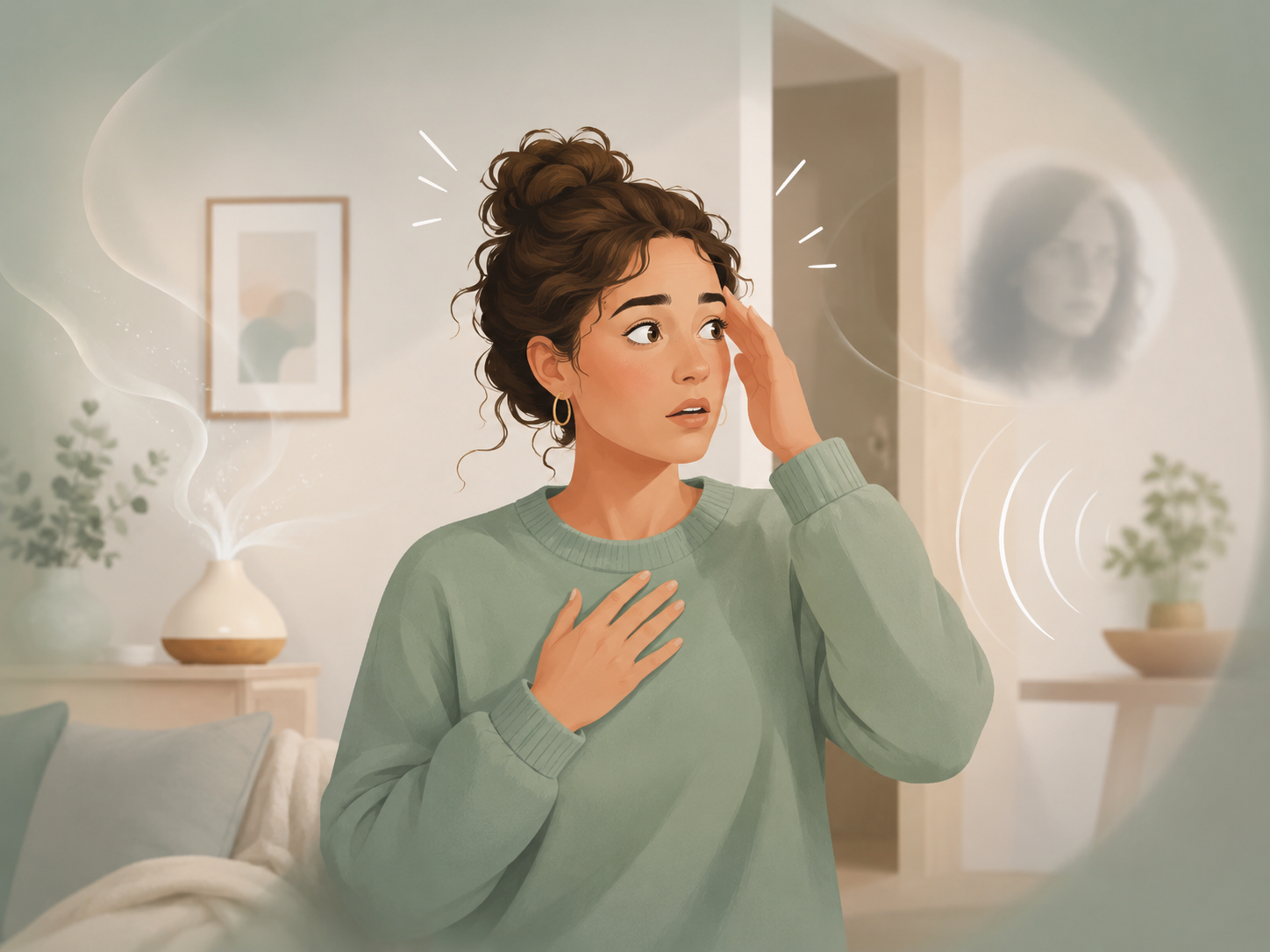
You are having an ordinary day when suddenly everything shifts.
A specific smell, a loud sound, or a look on someone’s face makes your heart race and your thoughts scatter.
You might feel a sudden urge to argue or hide, leaving you wondering why you reacted so strongly to something that seemed small.
It is important to know that you are not broken. These moments have roots in how your brain learned to protect you during difficult times.
By looking at trauma trigger examples, you can start to understand why your body stays on high alert and how you can begin to regain a sense of control in your daily life.
What These Reactions Actually Mean
A trauma trigger is anything, a sensation, a place, or a memory, that causes a strong physical response linked to a past event.
The trigger itself does not have to be dangerous right now. What matters is that your nervous system remembers it as a sign of trouble.
These trigger responses are not about logic; they are about patterns. Your brain is always scanning for threats using fast shortcuts.
If something today looks or feels like a past threat, your body reacts as if that old danger is happening again.
This is why trauma triggers look different for everyone; your system only cares about keeping you safe.
Common Examples of Trauma Triggers
While every person is different, many people notice these categories:
- Sensory Cues: The scent of a specific perfume, the hum of loud lights, or the feeling of a crowded room.
- Settings: Locations like hospitals, parking lots at night, or neighborhoods that look like where you used to live.
- Interactions: A specific tone of voice or facial expression that reminds you of someone who caused harm.
- Internal Feelings: A racing heart or muscle tension can trigger more stress because your body associates those feelings with fear.
- The Calendar: Specific holidays or seasons that bring back difficult memories.
Recognizing these patterns helps you see that your reactions are not random. They have a source, and they are part of how you survived.
Why Your Body Stays on High Alert
Many people feel frustrated with themselves and think they should be “over it” by now. However, your nervous system does not care about being productive or calm.
Its only job is to keep you alive. If you survived a time when you had to watch people’s moods closely, your system learned to react to tiny cues.
According to the National Institute of Mental Health, this constant state of alert is a physical response to past stress.
You might find it hard to relax, startle easily, or have trouble sleeping. These are signs that your survival response is firing in situations where it is no longer needed.
What Is Happening Inside You
When you encounter a trigger, your brain’s alarm system, the amygdala, takes over before your thinking brain can check if you are actually in danger.
In these moments, your body shifts into survival mode.
You might feel a rush of adrenaline, your breathing gets fast, and your muscles get tight. Some people feel like they “freeze” or feel numb.
Harvard Health notes that these physical changes are the body’s way of preparing for a “fight or flight” moment.
Because traumatic memories are stored differently, they often feel like they are happening right now rather than in the past.
Small Steps to Use Right Now
You may not be able to stop every trigger, but you can learn to manage the response. Here are a few ways to help your body feel grounded:
- Use Your Senses: Name four things you can hear and three things you can touch to remind your brain you are in the present.
- Focus on Breathing: Try to make your exhale longer than your inhale to signal to your nervous system that it is okay to calm down.
- Label the Feeling: Say to yourself, “I am having a trauma response.” This creates space between you and the intense feeling.
- Gentle Movement: Stretching or shaking out your hands can help release the physical energy your body is holding.
Why Professional Support Matters
Time alone does not always change these patterns because the survival parts of your brain do not respond to logic.
They need new experiences to learn that the danger has passed. We use trauma-informed care to help your nervous system catch up to your present reality.
Effective therapy focuses on building safety, addressing physical sensations, and correcting beliefs trauma may have given you.
For example, Cognitive Processing Therapy helps you update those thoughts, while Dialectical Behavior Therapy teaches concrete skills to handle intense feelings.
The goal is to help those trauma triggers lose their power over your life.
Frequently Asked Questions About Trauma Triggers
Does what I eat affect how I respond to triggers?
Yes, your physical health plays a role in how your nervous system handles stress. High levels of inflammation can make your body feel more sensitive to stress signals. When your body is physically stressed, it has a harder time staying calm when a trigger appears.
Can positive life events become triggers?
If you are used to chaos, a very calm or happy situation can feel “wrong” or unsafe to your nervous system. This is because your brain is waiting for something bad to happen. It takes time for your body to learn that peace is actually safe.
Is there a difference between a trigger and a “pet peeve”?
A pet peeve is something that annoys you, like a messy room. A trauma trigger causes a physical survival response, such as a racing heart or a feeling of panic. Triggers are deeply tied to your body’s safety system, while annoyances are tied to your preferences.
How do I explain my triggers to a partner?
It helps to talk about it when you are feeling calm. You might say, “When I hear loud voices, my body feels like it needs to run because of my past.” Giving them a small “user manual” for your nervous system can help them better support you.
Can pets help when I am triggered?
Many people find that pets provide “co-regulation.” Focusing on a cat’s weight or a dog’s breathing rhythm can help pull your nervous system out of a panic state. Animals offer a sense of safety that is not based on words.
Moving Forward
It is incredibly draining to spend your life waiting for the next hit to your nervous system.
Carrying the weight of the past while trying to function in the present is a full-time job, and you might feel exhausted by the constant vigilance.
These reactions are not a sign of failure; they are proof that your system is doing everything it can to protect you, even if those old methods are now making life feel impossible.
That’s why we provide the tools and expertise to help your nervous system finally feel that the danger is over.
If you are tired of carrying this weight alone, reach out to us or pay us a visit.
Disclaimer: The information shared in this blog is for informational purposes only and should not be considered a substitute for professional advice from a licensed mental health professional. If you are experiencing a mental health crisis or require immediate assistance, please contact your local emergency services or a crisis hotline.